
India has expressed serious concern over Houthi attacks on Saudi Arabia's civilian infrastructure and economic assets, stating that such actions threaten regional stability and freedom of navigation through the Bab-el-Mandeb strait. External Affairs Minister S Jaishankar discussed the issue with his Saudi counterpart. India also condemned the targeting of commercial shipping after an Indian national went missing following an attack on a Panama-flagged ship off Oman.

India has strongly condemned Pakistan's airstrike on a drug treatment centre in Kabul, calling it a barbaric act and a threat to regional peace and stability.

The inaugural Esports Nations Cup, initially planned for November this year, has been postponed to November 2027 by the Esports Foundation. This decision was made following an assessment of the wider regional situation and to ensure stability for participating national teams, publishers, partners, and fans. Despite the postponement, Saudi Arabia remains capable of hosting events, and existing development fund commitments will be maintained.
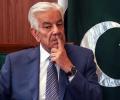
Pakistan's Defence Minister Khawaja Asif has reiterated the nation's unwavering commitment to the Makkah Joint Defence Agreement, underscoring its role in regional security following an attempted drone attack near the holy city of Mecca. The pact, signed by Pakistan, Turkiye, and Saudi Arabia, establishes a framework for collective deterrence against armed attacks.

Prime Minister Narendra Modi hosted Iranian President Masoud Pezeshkian in New Delhi for talks focusing on the West Asia situation, bilateral relations, and BRICS cooperation. The meeting, Pezeshkian's first visit to India as president, comes amidst heightened tensions in West Asia due to new US sanctions on Iran and concerns over global oil supplies from the Strait of Hormuz. Both leaders emphasised regional stability and economic resilience.

Iranian President Masoud Pezeshkian concluded his visit to India for the 18th BRICS Summit, announcing that Iran and the UAE agreed to move past previous tensions. This diplomatic breakthrough occurred during talks with Abu Dhabi's Crown Prince on the summit sidelines. Pezeshkian also met with PM Modi to discuss bilateral ties and West Asia developments, with Modi emphasising dialogue for regional peace. The BRICS summit adopted the New Delhi Declaration 2026, calling for global governance reforms and de-escalation in West Asia.

US President Donald Trump indicated that American military operations targeting Iran might not have concluded, while firmly rejecting immediate talks with Tehran. He asserted that Iran is facing severe military and economic difficulties and possesses limited capabilities, despite the reopening of the Strait of Hormuz.

The United States Central Command announced strikes against Iranian military targets, including air defence and communication sites, in retaliation for alleged attacks on commercial shipping and US personnel. However, Iran's Foreign Ministry claims these strikes caused over 50 civilian casualties at a wedding and vowed a firm response. Iran's state media also reported retaliatory ballistic missile and drone attacks on US bases in Jordan and Bahrain, claims which were partially corroborated by Kuwait and Jordan reporting intercepted drones and missiles.

National Security Advisor Ajit Doval met UAE President Mohamed bin Zayed Al Nahyan to discuss deepening strategic partnerships and the regional situation, following meetings with Saudi Arabian leaders earlier in April.

India successfully facilitated a significant diplomatic meeting between Iranian President Masoud Pezeshkian and UAE Crown Prince Sheikh Khaled bin Mohamed bin Zayed Al Nahyan on the sidelines of the BRICS Summit in New Delhi. This interaction, a diplomatic breakthrough given ongoing West Asia conflicts, occurred as BRICS adopted a declaration urging restraint and protection of civilians in the region, highlighting the bloc's commitment to peace and stability.

Xi brought in asymmetrical power play by stating that India should have 'strategic cognition' and 'strategic judgement made on the basis of the stage of development the two countries are at'. This is a very nuanced way of asserting China's coercive diplomatic posture and reflects Beijing's penchant to unleash border instability at will, restrict rare earth metal exports, exert pressure on India at global and regional orders, asserts China expert Srikanth Kondapalli.

India and Japan have signed a Memorandum of Arrangement on maritime security cooperation, committing to deepen defence ties and oppose unilateral actions that impede freedom of navigation in the Indo-Pacific, a move seen as directed at China's increasing military presence.

'India is trying to project that it can engage with the world in a different way too.'

Chinese President Xi Jinping addressed the BRICS summit, urging the bloc to play a significant role in achieving peace and tranquillity in West Asia and the Gulf region. He highlighted BRICS' growth over two decades, its efforts in tackling global challenges, and its steadfastness in safeguarding the interests of the Global South. Xi called for opposing the Cold War mentality, strengthening multilateralism, and promoting cooperation in emerging domains like AI, as China prepares to chair the next summit.

Former Army chief General Manoj Naravane asserted that while India's immediate attention is on Pakistan due to terrorism, China will be New Delhi's primary long-term competitor across political, economic, trade, and military domains, necessitating a strong military deterrence alongside dialogue.

A Kishore Kumar song, a birthday cake, a prince's break from protocol to thank his driver, a Persian painting on the ceiling of the presidential residence -- the BRICS Summit had many memorable moments.

New research suggests that Venus's slow spin rate and strong gravity likely caused any hypothetical moon it once had to crash into the planet. This study, led by astrophysicist Stephen Kane, models planetary interactions and indicates that Venus did not require a catastrophic event to lose a moon, but rather its inherent physical properties led to its absorption. This finding has implications for understanding moon retention in other slowly rotating terrestrial planets.

Prime Minister Narendra Modi is embarking on a two-nation tour to Uzbekistan and the Kyrgyz Republic, where he will attend the SCO Summit. He aims to advance India's vision for the region, focusing on security, connectivity, and opportunity, and to strengthen strategic partnerships in Central Asia, fostering a region free from terrorism.

India has once again raised alarms over the escalation in the security situation in the Red Sea area and strongly condemned Houthi strikes targeting Saudi Arabian territory, "including on civilians and economic assets."

Iranian President Masoud Pezeshkian is on a state visit to Pakistan to discuss the full implementation of an agreement signed between Iran and the US, alongside regional and international developments. The visit also aims to strengthen bilateral cooperation across various sectors, following recent high-level talks between the US and Iran in Switzerland regarding regional security.

New photographic evidence and a Pentagon inspector general's report confirm extensive damage to US military installations across the Middle East due to Iranian missile and drone strikes. The report details billions in financial costs, structural losses to hundreds of buildings, and damage to dozens of aircraft, contradicting previous assertions about US military readiness and ordnance stockpiles. The conflict also led to disruptions in the Strait of Hormuz, impacting global oil prices.

An Indian Army contingent, Navy warships INS Tarkash and INS Ikshak, and a naval band are participating in Seychelles' Golden Jubilee National Day celebrations. Prime Minister Narendra Modi is attending as the Guest of Honour, underscoring the strong strategic partnership and defence cooperation between India and the archipelago nation.

Prime Minister Narendra Modi met Iranian President Masoud Pezeshkian at the SCO summit, advocating for dialogue and diplomacy to resolve the West Asia conflict and expressing India's desire to expand and diversify trade with Iran. Pezeshkian, in turn, urged India to leverage its contacts to promote peace.

Researchers at IIT Madras have discovered that rare 'specialist' marine microorganisms play a crucial and previously underestimated role in maintaining the stability of ocean ecosystems. Their global analysis of bacterial communities, published in 'mSystems', reveals these microbes act as vital connectors within microbial networks, significantly impacting ecosystem resilience and informing conservation efforts.

Prime Minister Narendra Modi, addressing the SCO summit in Bishkek, called for a united front against terrorism and its financing, rejecting double standards. He emphasised resolving conflicts through dialogue and diplomacy, not battlefields. Modi also highlighted that connectivity projects must respect national sovereignty and territorial integrity, a veiled reference to China's Belt and Road Initiative. India's vision for SCO rests on security, connectivity, and opportunity.
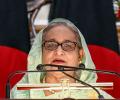
India has distanced itself from former Bangladesh prime minister Sheikh Hasina's recent media interaction in New Delhi, stating it played no role in the event nor endorsed her comments regarding the Bangladesh government. This comes after Bangladesh expressed outrage over the permitted interaction, which saw Hasina announce her determination to return to Bangladesh to restore democracy.

Seven Indian-flagged vessels, carrying 148 seafarers, are currently in the Persian Gulf region amidst escalating military tensions between the US and Iran. An Indian crew member was killed in a recent attack on a merchant ship, raising concerns about maritime safety and the fragile US-Iran peace deal.

The Mumbai Cricket Association (MCA) has significantly increased its subsidy corpus for affiliated clubs to Rs 500 crore over the next decade, aiming to bolster grassroots cricket infrastructure. Additionally, the MCA decided to name lounges at the iconic Wankhede Stadium after cricket legends Sachin Tendulkar, Ajinkya Rahane, and late Madhav Mantri.
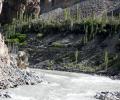
Pakistan's Deputy Prime Minister Ishaq Dar stated that the Indus Waters Treaty remains valid and binding, rejecting India's decision to revoke it following a terror attack. He emphasised the treaty's role in regional peace and warned of "profound consequences" if Pakistan is deprived of its allocated waters. PPP chief Bilawal Bhutto Zardari also proposed an international convention against the weaponisation of waterways.

India is hosting the BRICS summit, leveraging the platform to address global trade tensions and champion the developmental priorities of the Global South, including food, energy, and supply chain security. The summit, attended by leaders like President Xi Jinping and Vladimir Putin, will focus on resilience, innovation, cooperation, and sustainability, with India aiming to strengthen intra-BRICS collaboration and discuss global matters. The expanded BRICS grouping represents a significant portion of the world's population and GDP, making its discussions crucial for global economic stability.

India has lodged a 'strong protest' with Iran over recent strikes on commercial vessels in the Strait of Hormuz, which resulted in the death of one Indian sailor and injuries to several others, calling for an immediate cessation of hostilities and a return to diplomatic engagement.

Pakistan has criticised India's recent remarks on Pakistan-occupied Kashmir (PoK) protests, asserting it is addressing issues democratically. Pakistan also warned India against blocking water, calling it an "act of war," and commented on India's nuclear capabilities and its own military strikes in Afghanistan.

During the 18th BRICS Summit in New Delhi, Chinese President Xi Jinping and Prime Minister Narendra Modi held a bilateral meeting, outlining a four-point approach for the steady and long-term development of China-India relations. The leaders stressed strategic understanding, win-win cooperation, mutual respect, and inclusive multilateral engagement, reaffirming their commitment to resolving the boundary question and addressing economic concerns. They also discussed global challenges and strengthening people-to-people ties.

State-run Hindustan Aeronautics Limited (HAL) has delivered LCA Tejas FOC twin-seater trainers and HTT-40 basic trainer aircraft to the Indian Air Force, and Dhruv Next Generation helicopters to Pawan Hans. This significant handover, attended by Defence Minister Rajnath Singh and Civil Aviation Minister K Rammohan Naidu, underscores India's progress towards self-reliance in aerospace, strengthening both military and civil aviation capabilities with indigenous platforms.

'It appears to be a combination: A glacier breaking away, and a dam-like formation downstream reaching capacity and releasing water suddenly.'

Former CDS Anil Chauhan stated that China poses a long-term and comprehensive challenge to India, with the boundary issue remaining unresolved due to differing perceptions of the Line of Actual Control. However, he emphasised that India's ties with Beijing cannot be solely defined by border disputes, advocating for engagement through platforms like SCO and BRICS. He also highlighted the broader global geopolitical flux and instability in India's neighbourhood as significant security concerns, stressing the need for self-reliance.

A senior Geological Survey of India official warns that the Himalayas are vulnerable to cascading disasters, where one high-altitude event can trigger a chain of destructive events downstream, as evidenced by Nepal's recent floods. He stresses the need for integrated monitoring using satellite data and ground investigations to identify high-risk areas and improve preparedness in the Indian Himalayas.

Ten people, including a 3-month-old baby, were injured when a hydraulic crane toppled onto houses in Mumbai's Kurla East during preparations for demolition work, affecting goods train movement and damaging vehicles.

'Improved law and order and transparent governance have helped change UP's investment image.'

Iranian President Masoud Pezeshkian stated that Iran is considering various paths to address regional tensions, including negotiations conducted with dignity and authority, while emphasising that military gains should be reinforced through diplomacy.
